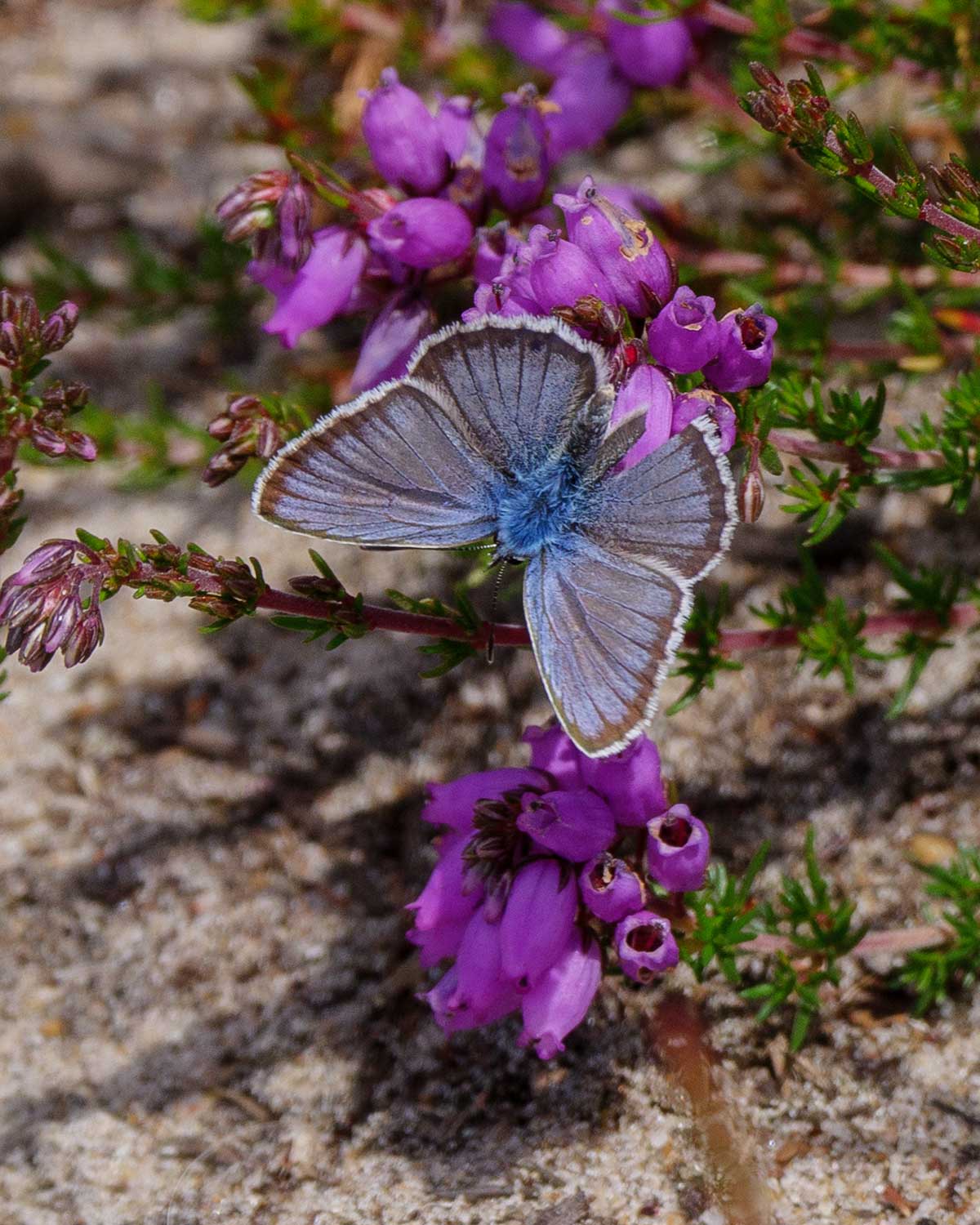
Monday, 20 August 2018

Rye Meads and Aston End

On Saturday I spent a few hours in the morning at Rye Meads. It was a toss up between here and Amwell, and while I haven't been to the latter for a couple of months, most of the recent passage waders etc have been seen at Rye so that made my mind up.
The weather was pretty dull and breezy at times but nothing much really happened and there were few migrant birds noted.
The Draper scrape held to only passage wader-a Common Sandpiper that had been present for a few days. There were supposed to be a few Green Sandpipers around as well, but they weren't present while I was there. One juvenile Lesser Black Backed Gull was being fed by one of it's parents-at least when the Heron, little Egret  and crows allowed it. Other than that it was pretty much lots of Teal, Gadwall and Mallards gradually moulting out of eclipse.


On to the lagoons without hearing or seeing much at all. Unlike last weekend, there seemed to be very few warblers around, and there weren't any finches or thrushes either. A quick look at the tern rafts on the southern lagoon didn't produce much variety as the water seemed to be covered in Mute Swans, there must have been 30 or more (with a lot more on the other stretches of water).
The water levels are a lot lower on the Gadwall Hide lagoon than on my previous visit, with the islands starting to appear. Lots of ducks, a few gulls and the occasional flyover Snipe were present-along with two eclipsed Garganey. Initially asleep they soon woke up, preened a bit (proving via the pale wing that one at least was a drake bird) before swimming purposefully over to the back of one of the islands.


I had a quick look for the recently found Wasp Spider but was misled by the trampled vegetation and ended up searching the wrong spot, so I carried on to the Warbler hide overlooking the Meads. A very early returning Bittern had been seen briefly a couple of times over previous days. The departing photographer had not seen it all morning and though I spent a bit of time there didn't see much at all apart from the usual Wood Pigeons, a distant Buzzard and a few Swallows heading south. Bumped into Maureen on the way back who told me where the Spider was. Very cunningly it was right by the sign that had been put up (and hidden from me when I passed earlier).
I have seen a few Wasp Spiders a few times on the East Anglian coast and while they have slowly moved inland and have been in Hertfordshire for a year or two, they are new for the reserve. This one was a hell of a lot bigger than I remember.


I returned to the Gadwall hide, finding Colin Wills who I haven't seen for over a year, so we had a bit of catching up to do, and then Maureen popped in for a bit. The Garganey had not been seen since I last saw them so presumably they were hauled up on the back of one of the islands.
With time pressing I eventually left, picking up a few Small Whites, a Speckled Wood and a couple of Blue Tailed and Common Blue damsels.

Sunday morning was again overcast, dull and rather breezy. I decided to have a long walk around Aston End, and though I hauled the camera gear around, it stayed in the bag as there was a distinct lack of action, and the landscape wasn't all that inspiring either.
The nearly five mile walk produced two calling Chiffchaff and a Blackcap. The usual migrant trap hedge along the Walkern road was scanned for some time but only produced a single Chaffinch and a juvenile Whitethroat.
The fields have been harvested, and the one by the phone mast was being harrowed while I was there and this had attracted around 25 Lesser Black Backed and 40 Black Headed Gulls, while there was a flock of 15 or so Swallows picking up the disturbed insects.

Thursday, 16 August 2018

Turtle Dove

Bit out of practice with this blogging lark-Colin and I had a trip out last Saturday and I've only just got round to sorting out the photos.
We did the usual post mid summer lull and went up to Norfolk just to see what happens. There have been a few early migrants like Red Backed Shrikes, and waders are starting to move so we thought we'd visit Titchwell. As it turned out we didn't see many migrants and the highlight was rather unexpected.
Leaving the car park, which was a bit cool and breezy, it quickly warmed up and the path beyond the centre had lots of dragonflies-Common and Ruddy Darters, Southern and Migrant Hawkers and a few damselflies. White butterflies, were seen frequently, a s well as a Painted Lady, a few Common Blues and several Grayling, one of which posed quite well for me.


The wildfowl on the lagoons were largely in eclipse and consisted of the usual suspects-Teal, Shoveller, Mallard and Shelduck in the main, with some diving ducks. Big flock of Avocets of course with a couple of Spoonbill failing to hide among them, but otherwise waders were Ruff and a few Godwits. The tide was well out so most of the waders were either on Thornham, in the deep muddy channels or on the beach. We failed to locate the Greenshank which were around, but found several Spotted Redshanks among the Redshank, Curlew and Grey Plovers on the brackish lagoon. Lots of Godwits, Curlew, Turnstone, Oystercatcher, Sanderling and Dunlin on the remains of the old beach forest.
Sea watching was very poor. while a few people had seen terns and skuas, all I managed to find was a single drake Common Scoter, so we headed back. Didn't pick up anything else though I heard a few Whimbrel. Rather oddly we never saw a raptor all morning.
The reeds by the path held one or two Reed and Sedge Warblers and we got decent views now and again of juvenile Bearded Tits, though they wouldn't stay still long enough for the camera. There were also a few Wagtails around-mostly families of Pied but we did also see a couple of Yellows.
The Fen Trail wasn't all that great. Apart from the dragonflies mentioned earlier there were a couple of Emperors, Black Tailed Skimmers and Common and Blue Tailed Damselflies.
Went to Patties Pool which had a couple of Red Crested Pochard, but the big bonus was in the paddocks nearby-a Turtle Dove. We watched it for some time a long way down the track before it flew onto the marsh and then back again. Did this several times, and I managed to get a few images through the scope  but it eventually came a lot closer and I got some decent shots with the 100-400 lens. Can't remember the last time I had such good views of this now rare summer visitor, and to be perfectly honest in the last 20 years there have been many years with ought a sighting at all, or at best very distant views in tree tops. Also, I didn't have a camera all that often when they were still fairly common (and when I did, why bother wasting precious film with common pigeons back then!).


After this we had a check of what was being reported and with not much on the coast, decided to head home.
We called in at Fowlmere for an hour or so. Unfortunately it had clouded over and got rather breezy (scotching plans for butterflies on Therfield Heath afterwards). This also affected the insects, and only a few Southern and Brown Hawkers were flying.
The woods were alive with warblers-Chiffchaffs, Blackcaps, a few Willows, Whitethroats and Lesser Whitethroats. The main lake was rather dry and full of Greylags and Mallards. Overhead and around the stables a large flock of Swallows Swifts and House Martins failed to produce a Hobby-though the ten or so House Martins pretty much doubled the number I'd seen this year.

Sunday, 5 August 2018

A Long Very Hot Weekend in the Garden

I booked a couple of days off to make a long weekend, mainly because we had family visit for a few days. However it also coincided with the RHS Hyde Hall Flower Show, which due to its popularity had been extended, and ran from Wednesday to Sunday. I have been going to this (or the later Autumn Plant Fair) for several years now and was really looking forward to this year.
I decided to go on Thursday, assuming it would be a bit quieter than the weekend, and as usual went with Sarah. I picked her up as planned and we made good progress on the roads, but actually arrived  bit later than expected, shortly before 11am. The car park filed was already half full (it opens at 10) and it was already incredibly hot and humid. I was pretty well exhausted by the time we reached the entrance, how I made it over the next four hours (and four miles walking) I don't know. I took extra fluids, a cool box and so on but regrettably I should have brought more along, as I felt really rough the next couple of days.
I always take a shopping list-essentially things that have caught my eye in books magazines or blogs that might be worth trying in the garden for ornamental or wildlife interest (or often plants that I find interesting for some reason). I never get anything on the list of course as I always end up with a bag or two of impulse buys and then have to wonder what to do with them once I get home. Sarah is at least a bit more restrained and managed to find some things she wanted.
The one stand I always make a bee-line for is Plantbase, which is a really interesting nursery near Bewl Water that always has fun and out of the ordinary plants. They always have the tomato relative Solanum atropurpureum which I have grown for a few years now from seed. Its rather nasty-highly toxic yellow fruit, thick purple stems covered in dense downward curving spines and very fast growing. Last year mine hit 5 feet with stems a couple of inches thick. This image was taken last July.


Rather surprisingly, (to me and to Graham who owns Plantbase) it survived my heavy cold clay overwinter in the ground-I only found this out in May when I was clearing the area to replant (with one I had overwintered under cover!). Unfortunately because of the late start to everything neither are going to grow all that big. Sarah's are however flowering at 3-4 feet high.
This year I was rather restrained and Graham sold me a couple of hardy cacti to go with the Opuntia hummus that I have had for years, and Puya mirablis that should survive for me and is a very good bee plant to boot. Its also good for Hummingbirds but I don't think I will be getting any of those in the garden.
Elsewhere I picked up a Grevilla victoriae, an Iochroma australis (both useful nectar and pollen sources) and a dwarf pomegranate because Ive always wanted one, plus a nice sundew. . I had hoped to replace many of my bulbs and aroids as I have lost a large number this year. A lot are grown in pots primarily to provide the right amount of drainage, ph etc. Some failed to get past spring which was very cold and wet, leading to some rotting. Some survived but have ended up being cooked by the excessive heat over the last few months. Unfortunately I couldn't find any I wanted and my current plan is to get the shady part of the garden revamped with lots of compost and bark and replant new arums and arisaemas in spring.
We didn't spend a great deal of time exploring the gardens unfortunately, simply because of the heat. I had pretty much forgotten that I had brought my camera with me and ended up with a handful of snaps.

A Grevillia hedge.


A greenhouse I wouldn't mind having with a suitable lottery win.


The dry garden and a bit of the new hill top building.


Butterflies were abundant in the gardens, with lots of Holly Blues, a few Common Blue and Brown Argus. Lots of whites, Meadow Browns and one Red Admiral. And my first Painted Lady of the yearwhich was hard to relocate and eluded the camera. The wildlife lake had a family of Tufted Ducks, one Dabchick with a chick, a few Mallards. The water level was very low making it hard to get to the dragonflies. Black Tailed Skimmers and two Emperors were the most obvious with (maybe) one Broad Bodied Chaser. Azure and Common Blue Damselflies could be found all over the garden with a few Common and (probably) Ruddy Darters, and the Brown Hawkers seemed to prefer the ornamental wooded ponds.
Didn't see much on th e way there or back, and didn't see much while I was in Sarah's garden though she has still got a few Swallows around.

Ive had one or two Swallows over my garden, presumably early returning birds but I guess any Swifts we might have had locally have long gone. The Goldfinches, Blackbirds and Blue Tits are still coming in and there are a couple of juvenile Dunnocks knocking around as well.
Ive had a few Azure Damselflies around the pond and hopefully they will colonise again. I have also had one or two Blue Tails (new to the garden) but strangely none of the larger dragonflies.
Butterflies are surviving reasonably well in the garden, with regular Meadow Brown and Gatekeepers, Large and Small Whites of course and my first Common Blue for several years. Unfortunately a lot of the plants that they would normally visit-Rudbeckias, Dahlias and so on are not flowering much if at all. A few verbenas and sea lavender plants seem to be the most popular at the moment. Bees and Hoverflies are attracted mainly to a large Persicaria, a few Zinnias, salvias and my large patch of Bronze Fennel. With a bit of luck, the heat is gradually going to drop, and if we get a decent spell of rain (last weekend's 5mm, the first since late May didn't do anything) I should get a few more things flowering and maybe a few more visitors like this-Rye Meads a couple of weeks ago.


Thursday, 19 July 2018

Some Recent Images

The heat over the last few weeks has become rather intolerable, and I haven't had much enthusiasm for going out on trips. The mornings can be nice and pleasant, but it tends to heat up rather quickly and by lunch time Ive had enough, though the same could be said for the wildlife.
A couple of weekends back, I thought it worth paying can early morning visit to Danemead and Broxbourne Woods. Both sites were full of butterflies of course-Meadow Browns, Gatekeepers, Skippers, Ringlets and Whites of course, and lots of Silver Washed Fritillaries. The larger dragonflies were also very evident, with Brown and Southern Hawkers very active.
Danemad was very dry, and as a result flowering plants were hard to come by, with only a few bramble patches providing nectar and the odd meadow plant still surviving in the more shady spots. No sign of any orchids. I had recently learnt that the rather scarce for Herts Fragrant Agrimony is present here, but the only plant I could locate was the more common variety.
Broxbourne seems to be getting better now following the work in recent years with signs of the heath returning-Brooms in particular being more prominent. However it is still hard to find Purple Emperors and White Admirals, though one of each was seen while I was there (the Emperor was seen flying over my car a few minutes before I got back to it). The pond was a nice place to stop, being very shaded. Azure, Common Blue, Blue Tailed and Large Red damselflies were present, along with a family of Moorhens. A Purple Hairstreak kept dropping down to drink-it was a bit too far away for a decent image though.


Last Saturday I went out with Colin to Derbyshire. We had intended to go to Sheffield for an Audoin's Gull, but unfortunately it departed shortly after sunrise. However I had anticipated this and had a couple of alternative sites in mind. A few miles west of Chesterfield we searched an an area of moor hoping to find a spot to stop off and explore for dragonflies. Everything seemed to be fenced off though, with no-where to stop and no apparent access points so we carried on to Padley Gorge.
We had visited some years back and enjoyed the scenery immensely. Being a rather nice day (humid though as they had had rain here the day before, lucky b..gers) it was very busy but still enjoyable. Didn't encounter any of the birds I had hoped to see-Wood Warbler Redstart and Pied Flycatcher. Instead it seemed to be full of Nuthatches, tits and Song Thrushes. Up on the moor we found a couple of Common Hawkers, and the butterflies included Small heath, Speckled Wood, lots of Whites and a Dark Green Fritillary.
We then headed up the Hope Valley a bit to a place called LeadMill. We used to stop off here in the days when we visited the upper Derwent and Ladybower every year as it was a reliable spot for Dippers. Not this year, though there are only a few small sections of the river that we could access.
Nice day out, but it would have been nice to see at least one of the target birds.


Sunday, 1 July 2018

Insects around Aston End

The heat has been rather unpleasant over the last week and the garden is starting to suffer, but thanks to judicious recycling, we have been keeping things going. Had to top the pond up though, as it had dropped considerably and the birds were no longer able to get to the water to drink. I have had several damselflies this year, and currently there are a few Azure Damsels around.


While there have been a few interesting things reported I didn't really want to do anything too taxing, and have largely stayed in during the day. However, this morning I left an hour or so earlier and took a stroll around Aston End-I haven't done this for a while and was hoping that it would produce a few butterflies. With hindsight, I think I should have saved a bit of weight, and kept the 100-400 zoom behind as everything could be done with the very nice Olympus 60mm macro.
Initially, just after 8am, birds were active, as it was still reasonably cool but as the morning progressed they tended to get a bit more elusive. Lots of Coal Tits singing in the Lanterns Lane plantation, usually I hear one or two birds but there were at least eight. Blackbirds, a couple of Song Thrushes and a few Robins were also singing around here. Blackcaps were vocal as well, and they seemed to be present in most stretches of wood and scrub. I would have expected singing to have stopped now, but perhaps the late spring has something to do with it.
The first butterflies were found along the lane as I approached Aston End-Large and small Whites and a few Meadow Browns. Heading down to the ford, Ringlets and Gatekeepers started to appear and I saw my first Marbled White. The river at the ford was bone dry of course (though one or two pools survived in the shady areas upstream) and a lovely red band of poppies could be seen on the other side along the Walkern Road  (a designated roadside habitat).


I was surprised at how damp it was in the shade up here-the cool nights have led to heavy dew in the mornings. Most of the Marbled Whites I saw were along this stretch, perhaps a dozen along a 100m stretch. Many roosting Ringlets were here in the shady bits with lots of Meadow Browns as well. Had a few Skippers as well-Large and Small, and a few bees, bugs and flies.


 Eventually the poppies fizzled out and so did the insects, though I was starting to see  Small Tortoiseshells on the footpath, and Meadow Browns were still flitting around. I stopped for a bit by the wooden bridge over the river as it was nice and cool in the shade. Watched a young Whitethroat feed in the lush vegetation in the river bed for a while. Scanning the skies was productive, with several distant Kites and Buzzards in the thermals. One Swallow was seen (there are usually several active nests in the stables near here so obviously not a good year for them) and a small flock of Swifts over Aston far to the south.
The path near the stables was nice and shady, and there was still some water in the river bed. No sign of any dragon or damselflies unfortunately, but I did find several Speckled Woods and Commas along this stretch. It was getting close to 11am now, the heat was really getting up and birds had pretty much disappeared. I had hoped to see a few more butterflies and insects on the stretch up to Chells Manor but the usual areas were very overgrown and rank, and apart from a few whites and browns I didn't see anything of note.
Couple of things. No blue butterflies anywhere, or Small Heaths, and while there were lots of Small Tortoiseshells, and a couple of Commas, where were the Red Admirals and Peacocks? There weren't all that many beetles or bugs on the Knapweeds thistles and umbellifers either, and what I did see were limited to a few species.


Tuesday, 26 June 2018

Thursley Dragonflies and Woodland Butterflies

Colin and I spent Sunday in Surrey with the intention of seeing a few dragonflies. My year list up to that point was 13 which was ok, and by the end the day we had seen a total of 19 species. We also managed to see a decent selection of butterflies and plants as well. The only drawback was the heat which by early afternoon had risen to the point that we had to call a halt.
The morning was spent at Thursley, and based on our previous visit a couple of years ago, we did a circuit to include the heath running up to the south-eastern woodland and then came back via the boardwalk. This enabled us to cover most of the habitats and so pick up the greatest number of species.
The first thing was spend a bit of time around the Moat Pond. The lily pads held Red Eyed, Common and Azure Damselflies. One or two Emperors and Brown Hawkers were also present but Emerald Dragonflies are the main target. There were several Downy Emeralds, all very active and impossible to photograph. The first one we got good views of was assumed to be Downy at first but having got my eye in it proved to be a Brilliant Emerald.
Out on the heath, searches of suitable areas failed to find any Graylings but we did see a few Silver Studded Blues, though not the numbers that we tend to see in the New Forest. One Dark Green Fritillary was also seen, plus a few Whites, Large Skippers and a Brown Argus.


Large Red, Small Red, Blue Tailed and Emerald damselflies were abundant as were Keeled Skimmers, Four Spotted Chasers and Common Darters. One or two Broad Bodied Chasers, Black Tailed Skimmers and Beautiful Demoiselles were also seen.


Birds were hard work at times. We failed to find any Redstarts or Woodlarks which was disappointing and there weer no Hobbies, Martins, Cuckoos either which tend to be seen most visits. There were two or three singing Tree Pipits, several families of Stonechats and lots of Dartford Warblers-we found pairs/family groups in at least three different locations.


Having recently got a nice Olympus 60mm macro lens for the GX8 I am trying to spend a bit more time photographing plants, partly for identification purposes. Having an interest in carnivorous plants, the Round Leaved Sundews were a special target. I also accidentally took a rather poor photo of an Oblong Leaved Sundew as well.


Most of the insects on the heath proved too difficult to photograph, but everywhere we went  small wasps could be seen in the sandy spots and they were pretty easy to get. Not sure yet what they were but I did watch some dragging prey back to their burrows.


We spent an hour or so after lunch at Oaken Wood (Botany Bay). It turned out to be a bit late for the Wood Whites (though one had been seen the previous day) but there were a lot of other whites flying, plus Large Skippers and Speckled Woods along the main ride. Silver Washed Fritillaries weer everywhere and it soon became apparent that this is also a pretty good place for White Admirals-we saw good 20 or so. Met a local who had rescued a fresh Purple Hairstreak that appeared to be either very fresh with weak wings or rather poorly. He had seen at least a dozen Purple Emperors and sent us to a suitable spot, but mentioned that activity had dropped off rapidly due to the heat. One was still flying but it never really settled.