
Friday, 19 August 2016
Oak Bush Cricket
Had a bit of fun and games last night when I was going to bed when this thing turned up. Took it into the bathroom with the intention of putting it on the tiled surface to photograph and it wouldn't say still long enough. Eventually settled on the window frame but I had lighting issues with the flash on the compact camera only an inch from the cricket causing severe over exposure.


Monday, 8 August 2016
Saturday at Minsmere
A Purple Swamphen (formerly Purple Gallinule) had been at Minsmere all week. Although there have been a few previous records, all seem to have been presumed escapes, being subspecies from outside Europe. This one was different, being the Western subspecies from SW Europe, and since there had been a few out of range records from France recently, presumably due to drought it seemed a reasonably safe bet to be a British first.
I got to Colin's just after 5am and we reached Minsmere at 7am. We were not the first, there were already plenty of cars in the car park, and by the time we got to the south hide stake out there were something like 150 birders lined up along the edge of the pool, some having come from Cornwall and a seven hour overnight drive. Unfortunately the news wasn't good, there had been no sign since first light, and it had always been seen in the early morning. While waiting, two Marsh Harriers put in a very brief appearance, three Green Sandpipers flew over, and I had a very brief flight view of what could have been a Bittern. The pool was full of Little Egrets with maybe a dozen birds present-hard to be sure as my view was rather restricted. Water rails were screaming in the reeds, and Bearded Tits were pinging all the time, so it was a rather pleasant wait.
After about three hours we decided to go back to the car for a coffee-I had suggested to one of the reserve volunteers that sending down a tea trolley would be a good idea but it never turned up unfortunately. The Buddlejas around the car park were full of butterflies now it had warmed up. Large numbers of Red Admirals, Peacocks and Graylings with a few Commas and my first Painted Lady for a couple of years, and a few Southern and Brown Hawkers were buzzing around as well.

After the break we decided to do a circuit and await news. More Hawkers were seen around the old car park pool, plus a few Emerald and Common Blue damselflies. A Small Copper (my first this year) was seen outside the Northern Hide. Not much seen from the hide, though I saw a very distant Common Sandpiper, in the same area that a Wood Sand had been reported.
Never did see the Stone Curlews on the heath, but we spent a bit of time with the Bee Wolves and Pantaloon Bees.


The East Hide was rather busy but we found a spot on the lower floor, being joined by a couple of the Tyttenhanger guys. The most notable sight was the large flock of Little Gulls-over 30 were present, in various states of plumage including a couple of near adults. Two Mediterranean Gulls were also with them. Three Spotted Redshanks were near the far edge of the reeds, and a big flock of Black Tailed Godwits held a few Ruff, one Knot, some Dunlin and singles of Ringed and Little Ringed Plovers. A Curlew Sandpiper was supposed to be out there as well.
The walk south to the sluice produced more butterflies and dragonflies but few birds in the bushes. A very brief sea watch revealed a couple of Sandwich Terns, some distant gulls and a passing Gannet. A juvenile Stonechat was in the sluice bushes and a juvenile Wheatear was using the gatepost as a perch.

Still no sign of the Swamphen as we reached the south hide, and the crowd had thinned out noticeably. Its a huge reed bed so there was some hope that it was still around, but having favoured one small bit for five days it looked like it might have departed, so after five and a half hours we called it a day. Before we left we spent a few minutes with the Ant Lion colony by the visitors centre. No feeding while we were there though I could see moving jaws (not sure if thats the correct terminology) in two of the nearest pits.
We went up to Walberswick and spent about an hour raptor watching. Two birds on show when we got there turned out to be a Marsh harrier and a Common Buzzard-both birds popped up again a bit later. Heard a Bullfinch, saw a juvenile Whitethroat, a Stonechat and a couple of Mistle Thrushes, and a Swift flew over. A couple of very distant raptors proved hard to identify in the heat haze, not helped by some also very distant corvids and gulls. However it did get a bit steadier at times and one raptor looked to be very good structurally for Honey Buzzard. About ninety minutes after we left, both Honeys were seen together, presumably rather closer this time.
I got to Colin's just after 5am and we reached Minsmere at 7am. We were not the first, there were already plenty of cars in the car park, and by the time we got to the south hide stake out there were something like 150 birders lined up along the edge of the pool, some having come from Cornwall and a seven hour overnight drive. Unfortunately the news wasn't good, there had been no sign since first light, and it had always been seen in the early morning. While waiting, two Marsh Harriers put in a very brief appearance, three Green Sandpipers flew over, and I had a very brief flight view of what could have been a Bittern. The pool was full of Little Egrets with maybe a dozen birds present-hard to be sure as my view was rather restricted. Water rails were screaming in the reeds, and Bearded Tits were pinging all the time, so it was a rather pleasant wait.
After about three hours we decided to go back to the car for a coffee-I had suggested to one of the reserve volunteers that sending down a tea trolley would be a good idea but it never turned up unfortunately. The Buddlejas around the car park were full of butterflies now it had warmed up. Large numbers of Red Admirals, Peacocks and Graylings with a few Commas and my first Painted Lady for a couple of years, and a few Southern and Brown Hawkers were buzzing around as well.

After the break we decided to do a circuit and await news. More Hawkers were seen around the old car park pool, plus a few Emerald and Common Blue damselflies. A Small Copper (my first this year) was seen outside the Northern Hide. Not much seen from the hide, though I saw a very distant Common Sandpiper, in the same area that a Wood Sand had been reported.
Never did see the Stone Curlews on the heath, but we spent a bit of time with the Bee Wolves and Pantaloon Bees.


The East Hide was rather busy but we found a spot on the lower floor, being joined by a couple of the Tyttenhanger guys. The most notable sight was the large flock of Little Gulls-over 30 were present, in various states of plumage including a couple of near adults. Two Mediterranean Gulls were also with them. Three Spotted Redshanks were near the far edge of the reeds, and a big flock of Black Tailed Godwits held a few Ruff, one Knot, some Dunlin and singles of Ringed and Little Ringed Plovers. A Curlew Sandpiper was supposed to be out there as well.
The walk south to the sluice produced more butterflies and dragonflies but few birds in the bushes. A very brief sea watch revealed a couple of Sandwich Terns, some distant gulls and a passing Gannet. A juvenile Stonechat was in the sluice bushes and a juvenile Wheatear was using the gatepost as a perch.

Still no sign of the Swamphen as we reached the south hide, and the crowd had thinned out noticeably. Its a huge reed bed so there was some hope that it was still around, but having favoured one small bit for five days it looked like it might have departed, so after five and a half hours we called it a day. Before we left we spent a few minutes with the Ant Lion colony by the visitors centre. No feeding while we were there though I could see moving jaws (not sure if thats the correct terminology) in two of the nearest pits.
We went up to Walberswick and spent about an hour raptor watching. Two birds on show when we got there turned out to be a Marsh harrier and a Common Buzzard-both birds popped up again a bit later. Heard a Bullfinch, saw a juvenile Whitethroat, a Stonechat and a couple of Mistle Thrushes, and a Swift flew over. A couple of very distant raptors proved hard to identify in the heat haze, not helped by some also very distant corvids and gulls. However it did get a bit steadier at times and one raptor looked to be very good structurally for Honey Buzzard. About ninety minutes after we left, both Honeys were seen together, presumably rather closer this time.
Tuesday, 2 August 2016
Thursley and Alice Holt Sunday
On Sunday Colin and I headed out to Thursley as it looked to be a good day for insects-and we had done the trip the same time last year with good results.
Although it was a bit cool when we arrived, the sun was shining and since it was a bit early we headed out into the middle of the reserve to look for birds rather than do the circular walk up to Shrike Hill. I cannot remember the last time we had visited this bit of the reserve-it was certainly well before the big fire ten years ago. Then we could expect to see Dartford Warblers, Woodlarks and Tree Pipits but I had no idea if their populations had recovered.
The first birds I found were a pair of Redstarts just east of the Moat, and then we started to pick up family parties of Stonechats. The first dragonflies were seen in the ditches by the main track-Keeled Skimmers in abundance, the first of many Emerald Damselflies and our only pair of Small Red Damselflies of the day. Swallows were feeding overhead, and a few Brimstones and Gatekeepers were seen, plus a few Skippers.
The large stands of Gorse (actually on Oakley Common) held a family of Dartford Warblers, and vast numbers of Black Darters and a few Silver Studded Blues were in the more open areas. We reached the woods at the south eastern end and after chatting to one of the locals we made our way back heading towards Shrike Hill and eventually onto the boardwalk. Here we found many Common Darters, a few Ruddys, more Emeralds and Skimmers, one Emperor and a couple of Common Hawkers. Rather strangely no Chasers were seen on the three hour circuit and hardly any blue damselflies either, though a few were of the latter on the Moat lilies.


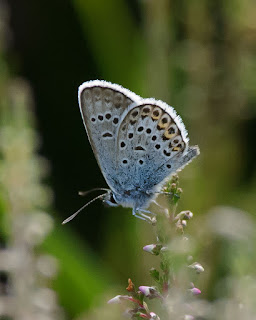


As last year we spent the early afternoon in the Straits Inclosure of Alice Holt Forest. Birds were rather quiet but I found a couple of juvenile Spotted Flycatchers in exactly the same tree I saw some last year. Butterflies were largely restricted to Meadow Browns and Ringlets along the ride, with a few Silver Washed Fritillaries on the brambles, plus a few Peacocks and Commas. A few Purple Hairstreaks were seen up in the tops of the trees but unfortunately despite spending a while around the two Sallows no Purple Emperor appeared.

Although it was a bit cool when we arrived, the sun was shining and since it was a bit early we headed out into the middle of the reserve to look for birds rather than do the circular walk up to Shrike Hill. I cannot remember the last time we had visited this bit of the reserve-it was certainly well before the big fire ten years ago. Then we could expect to see Dartford Warblers, Woodlarks and Tree Pipits but I had no idea if their populations had recovered.
The first birds I found were a pair of Redstarts just east of the Moat, and then we started to pick up family parties of Stonechats. The first dragonflies were seen in the ditches by the main track-Keeled Skimmers in abundance, the first of many Emerald Damselflies and our only pair of Small Red Damselflies of the day. Swallows were feeding overhead, and a few Brimstones and Gatekeepers were seen, plus a few Skippers.
The large stands of Gorse (actually on Oakley Common) held a family of Dartford Warblers, and vast numbers of Black Darters and a few Silver Studded Blues were in the more open areas. We reached the woods at the south eastern end and after chatting to one of the locals we made our way back heading towards Shrike Hill and eventually onto the boardwalk. Here we found many Common Darters, a few Ruddys, more Emeralds and Skimmers, one Emperor and a couple of Common Hawkers. Rather strangely no Chasers were seen on the three hour circuit and hardly any blue damselflies either, though a few were of the latter on the Moat lilies.


As last year we spent the early afternoon in the Straits Inclosure of Alice Holt Forest. Birds were rather quiet but I found a couple of juvenile Spotted Flycatchers in exactly the same tree I saw some last year. Butterflies were largely restricted to Meadow Browns and Ringlets along the ride, with a few Silver Washed Fritillaries on the brambles, plus a few Peacocks and Commas. A few Purple Hairstreaks were seen up in the tops of the trees but unfortunately despite spending a while around the two Sallows no Purple Emperor appeared.

Saturday, 30 July 2016
Rye Meads and Danemead
The butterfly and dragonfly drought continues for me, but at least I managed to see a few today. I went to Rye Meads this morning in order to catch up with the Garganey that have been around for a while and hopefully a few other things as well.
I got there just after nine and headed for the Draper Hide. On the way I stopped at the start of the boardwalk and spent some time watching the young Chiffchaffs and Willow Warblers. I missed a great shot when one of the Chiffs came down onto a dead umbellifer and posed really well but picking the camera up was sufficient to flush it.
I spent over an hour in the Draper, chatting to an astronomer, Mark that I had bumped into at Tring some time back as we searched for the Garganey which I eventually picked up a long way off at the back of the scrape. The Dunlin and three Green Sands were a bit more obliging. Most of the ducks are still in moult of course but it was interesting to pick up a pair of Teal and several Shoveller among them. One Snipe showed briefly before flying off. At least one pair of Common Terns remained with two juveniles.
We walked up to the lagoons-unfortunately the water was rather high and not quite what I expected. We found a few butterflies-mainly whites and a few hoverflies, bees and beetles. I left Mark heading up to the Kingfisher hide and made my way back, taking a detour around the summer trail. This had a few Sedge and Reed warblers and a dragonfly flew past but I couldn't get on it.
Back outside the Draper Hide, the sun had come out and it was warming up. Several Gatekeepers, Meadow Browns and a Comma were nectarine on the ragwort, and I found a Brown Argus there as well. A few Common Blue damsels, a Southern Hawker and a Migrant Hawker were seen around the pools-these were the first odonate in over six weeks.


I had sufficient time to call in at Danemead in Broxbourne Woods for a quick circuit. The cattle that are being used to graze the meadow have taken off much of the flowering vegetation (and blocked the usual entrance gate) but there were still plenty of butterflies present. Mostly Meadow Browns and Gatekeepers but one rather tatty Silver Washed Fritillary was found. A walk around the wood and river failed to find any Broad Leaved Helleborines but I eventually found two rather nice specimens by the reserve sign-I had walked straight past them on my way in. Birds were rather quiet, but a large tit and crest flock entertained me for a while-not surprising when the first bird i got on to was a juvenile Firecrest!

I got there just after nine and headed for the Draper Hide. On the way I stopped at the start of the boardwalk and spent some time watching the young Chiffchaffs and Willow Warblers. I missed a great shot when one of the Chiffs came down onto a dead umbellifer and posed really well but picking the camera up was sufficient to flush it.
I spent over an hour in the Draper, chatting to an astronomer, Mark that I had bumped into at Tring some time back as we searched for the Garganey which I eventually picked up a long way off at the back of the scrape. The Dunlin and three Green Sands were a bit more obliging. Most of the ducks are still in moult of course but it was interesting to pick up a pair of Teal and several Shoveller among them. One Snipe showed briefly before flying off. At least one pair of Common Terns remained with two juveniles.
We walked up to the lagoons-unfortunately the water was rather high and not quite what I expected. We found a few butterflies-mainly whites and a few hoverflies, bees and beetles. I left Mark heading up to the Kingfisher hide and made my way back, taking a detour around the summer trail. This had a few Sedge and Reed warblers and a dragonfly flew past but I couldn't get on it.
Back outside the Draper Hide, the sun had come out and it was warming up. Several Gatekeepers, Meadow Browns and a Comma were nectarine on the ragwort, and I found a Brown Argus there as well. A few Common Blue damsels, a Southern Hawker and a Migrant Hawker were seen around the pools-these were the first odonate in over six weeks.


I had sufficient time to call in at Danemead in Broxbourne Woods for a quick circuit. The cattle that are being used to graze the meadow have taken off much of the flowering vegetation (and blocked the usual entrance gate) but there were still plenty of butterflies present. Mostly Meadow Browns and Gatekeepers but one rather tatty Silver Washed Fritillary was found. A walk around the wood and river failed to find any Broad Leaved Helleborines but I eventually found two rather nice specimens by the reserve sign-I had walked straight past them on my way in. Birds were rather quiet, but a large tit and crest flock entertained me for a while-not surprising when the first bird i got on to was a juvenile Firecrest!

Tuesday, 19 July 2016
Butterfly Weekend
Its been a pretty dire year for me regarding insects in general. I have only really had two days with Dragonflies, and Butterflies have been really hard to see. The best weather always seems to occur when I am work, withs seemingly a never ending sequence of dull, cool and wet weekends.
I wasn't feeling all that great this past weekend and didn't really want to go out. It was supposed to be another cloudy and cool Saturday morning with the promise of the occasional sunny break, so was rather surprised when the clouds cleared not long after a late breakfast so I decided to go for a walk with the camera and see what I could find.
This time of year the birds tend to be rather quiet, and hard to see so I want really expecting much. The walk through the conifer plantation and down to Aston End was punctuated by the occasional calls of young Blue and Great Tits, and singing singles of Song Thrush and Chiffchaff. Speckled Woods should have been out but I never found any, but once clear of the woods White butterflies started to appear, predominantly Green Veined and Large, and one Small. A few red Admirals and my first Gatekeepers of the year were seen on brambles in the hedgerows.
A big flock of screaming Swifts over the ford were the first birds of note, though there were also a few Yellowhammers and Linnets around. Once onto the footpath heading up river Meadow Browns and Ringlets started to appear, plus a few more Gatekeepers. The best bit, a large patch of thistle and burdock near the horse paddocks held my interest and most of the photographs were taken here. Apart from the abundant Meadow Browns, I found a few Large, Small and Essex Skippers, some Tortoiseshells and my one and only Comma of the year (so Far). Beetles and bees were targeted as well, including a very nice long horn called Rutpela maculata. Another smaller beetle with swollen legs caught my eye-I had seen a few on Twitter earlier in the week but the name escapes me.
I was expecting to encounter Small Heaths on the more open grazed paddocks but couldn't find any, but heading up the hill to the Chells Manor radio mast I found at least a dozen Marbled Whites.
Since then the weather has improved considerably with a lot of sun and heat (maybe too much of that as I write) and this has brought a few more species into the garden. Since I have a lot of nasturtiums, I have started to get frequent visits from Large Whites (so the nasturtiums probably won't last much longer) plus a few Green Veined Whites. As mentioned in previous years, Ringlets are also turning up-they seem to favour a few areas around the pond but I don't really know what plants are bringing them in. With a lot of marjoram starting to flower, Gatekeepers are also appearing. I am also getting a lot more bees-still to be identified and one of these days I will have to try and sort out the moths particularly as there are a few plants grown specially for them.


I wasn't feeling all that great this past weekend and didn't really want to go out. It was supposed to be another cloudy and cool Saturday morning with the promise of the occasional sunny break, so was rather surprised when the clouds cleared not long after a late breakfast so I decided to go for a walk with the camera and see what I could find.
This time of year the birds tend to be rather quiet, and hard to see so I want really expecting much. The walk through the conifer plantation and down to Aston End was punctuated by the occasional calls of young Blue and Great Tits, and singing singles of Song Thrush and Chiffchaff. Speckled Woods should have been out but I never found any, but once clear of the woods White butterflies started to appear, predominantly Green Veined and Large, and one Small. A few red Admirals and my first Gatekeepers of the year were seen on brambles in the hedgerows.
A big flock of screaming Swifts over the ford were the first birds of note, though there were also a few Yellowhammers and Linnets around. Once onto the footpath heading up river Meadow Browns and Ringlets started to appear, plus a few more Gatekeepers. The best bit, a large patch of thistle and burdock near the horse paddocks held my interest and most of the photographs were taken here. Apart from the abundant Meadow Browns, I found a few Large, Small and Essex Skippers, some Tortoiseshells and my one and only Comma of the year (so Far). Beetles and bees were targeted as well, including a very nice long horn called Rutpela maculata. Another smaller beetle with swollen legs caught my eye-I had seen a few on Twitter earlier in the week but the name escapes me.
I was expecting to encounter Small Heaths on the more open grazed paddocks but couldn't find any, but heading up the hill to the Chells Manor radio mast I found at least a dozen Marbled Whites.
Since then the weather has improved considerably with a lot of sun and heat (maybe too much of that as I write) and this has brought a few more species into the garden. Since I have a lot of nasturtiums, I have started to get frequent visits from Large Whites (so the nasturtiums probably won't last much longer) plus a few Green Veined Whites. As mentioned in previous years, Ringlets are also turning up-they seem to favour a few areas around the pond but I don't really know what plants are bringing them in. With a lot of marjoram starting to flower, Gatekeepers are also appearing. I am also getting a lot more bees-still to be identified and one of these days I will have to try and sort out the moths particularly as there are a few plants grown specially for them.


Monday, 11 July 2016
RHS Wisley Visit
The weekend didn't go to plan, not that we really had one anyway.
Basically, this time of year we would like to go down to the southern heaths-New Forest, Thursley and concentrate on the plants and insects, with the added bonus of picking up a few birds in the process. The weather forecast on Friday seemed to suggest that Sunday was no good, but Saturday would be reasonably warm, with sunny spells throughout the day. What we got was overcast skies, a constant breeze with occasional gusts and it wasn't quite as warm as expected so we gave up fairly quickly.
In order to make something of the day, I thought it might be worth visiting a garden. A quick online search for anything in Hampshire didn't produce anything obvious, so I took advantage of my RHS card and got Colin into Wisley. Big problem for me is that I didn't really have the right camera lenses with me apart from the 100mm macro, so I had to resort to the iPhone (using one of the apps that enable it to take TIF files) for the more general wide shots.
The borders weren't all that colourful, its an in-between period where the early spring flowers have gone over and the high summer perennials and tender plants have yet to get going. We basically had Geraniums and Veronicastrums, with a few odd spot plants among the grasses. The meadows looked good, particularly the one based on African plants-dominated by Berkheya and Dieramas. Shame about the wind.
The woodland areas naturally were a bit quiet, a few Rhododendrons were still flowering, but the main shrub colour was provided by Hydrangeas Viburnums and Dogwoods. The banana and tree fern grove was looking pretty good. Would love to be able to get my tender plants to overwinter like these ones.
The alpine house, with a bonsai display outside had some interesting plants and bulbs, and the main glasshouse had the usual orchid display. Fuchsias were also on display, including a few of the more unusual species. Would have liked to have had my other lenses and the flash in here, plus the polarisers as only a few of the large tropical and african plants came out well on the iPhone.


Basically, this time of year we would like to go down to the southern heaths-New Forest, Thursley and concentrate on the plants and insects, with the added bonus of picking up a few birds in the process. The weather forecast on Friday seemed to suggest that Sunday was no good, but Saturday would be reasonably warm, with sunny spells throughout the day. What we got was overcast skies, a constant breeze with occasional gusts and it wasn't quite as warm as expected so we gave up fairly quickly.
In order to make something of the day, I thought it might be worth visiting a garden. A quick online search for anything in Hampshire didn't produce anything obvious, so I took advantage of my RHS card and got Colin into Wisley. Big problem for me is that I didn't really have the right camera lenses with me apart from the 100mm macro, so I had to resort to the iPhone (using one of the apps that enable it to take TIF files) for the more general wide shots.
The borders weren't all that colourful, its an in-between period where the early spring flowers have gone over and the high summer perennials and tender plants have yet to get going. We basically had Geraniums and Veronicastrums, with a few odd spot plants among the grasses. The meadows looked good, particularly the one based on African plants-dominated by Berkheya and Dieramas. Shame about the wind.
The woodland areas naturally were a bit quiet, a few Rhododendrons were still flowering, but the main shrub colour was provided by Hydrangeas Viburnums and Dogwoods. The banana and tree fern grove was looking pretty good. Would love to be able to get my tender plants to overwinter like these ones.
The alpine house, with a bonsai display outside had some interesting plants and bulbs, and the main glasshouse had the usual orchid display. Fuchsias were also on display, including a few of the more unusual species. Would have liked to have had my other lenses and the flash in here, plus the polarisers as only a few of the large tropical and african plants came out well on the iPhone.


Monday, 4 July 2016
Images from a recent Walk
Didn't go out travelling this weekend. As a result I missed a Great White Egret at Amwell which dropped in briefly on Sunday (I had decided that since it was a 'quiet' time of year there was not much point going down for the usual social gathering and worked in the garden instead, never mind).
Took the macro lens out on a stroll on Saturday. Being rather windy there want much in the way of butterflies etc until I reached a warm sheltered spot. Here are a few images, most being unidentified.


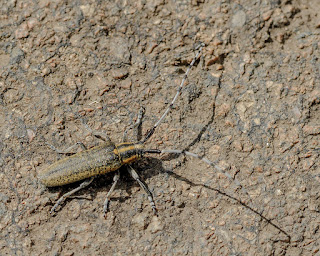

Took the macro lens out on a stroll on Saturday. Being rather windy there want much in the way of butterflies etc until I reached a warm sheltered spot. Here are a few images, most being unidentified.


Subscribe to:
Posts (Atom)