Saturday, 23 June 2012
Scotland
Just a quick update so far- pics to follow when I get home
Drove up thursday night through heavy rain and got to Perthshire not long after dawn. Pretty poor start-Black Grouse lek was very wet and did not see any birds apart from a juvenile Goshawk. Bills Coral root orchid site was not successful either, just got very wet. Better luck at Keltney Burn, found lots of orchids and other plants.
Loch Garten Ospreys showed well and we got Northern Damsel and White Faced Darter. Several Crosbill species heard and one Crested Tit
Today saw a few distant dolphins at Channory Point, then went to Bienne Eigh. Weather poor for insects, but no one I have met has seen much here anyway.
Up to Gairloch and picked up Red and Black Throated Divers, various auks but no Eagles. Scenery nice in the rain though.


Sunday, 17 June 2012
Surrey
A few days ago, I came across references to a site in Surrey at Wrecclesham where Glanville fritillaries had been introduced (not exactly authorised) and over ten year or so had grown into possibly the biggest colony in the UK.
The old disused sand quarry proved a bit tricky to get to as there was no obvious access and it took a couple of wrong decisions up narrow lanes before we decided that the best bet was to park at the rugby club and walk.
It was a bit cool when we arrived, with a lot of cloud and nothing much happened for a while. We bumped into another first time visitor who had been present for a while and had a chat. I left them and wandered down into the quarry itself, thinking that it would be warmer and less breezy. The most obvious wildlife interest came from the very vocal Marsh Frogs which could be heard from a long way off. I found a few damselflies, my first Common Blue and Green Hairstreak for the year and another visitor wondering where the best spots were.
Withy the sun coming out and the heat building up I returned to the higher ground where the abundant clover and ox eye daisies looked to be the best nectar sources and not long after I found the first Glanville and got fair images. I met up with Colin and the other guy who had seen a couple and over about half an hour we eventually saw about a dozen, including several pairs.
I then took Colin down into the quarry where we had numerous Broad Bodied Chasers, a Beautiful Demoiselle, and about a dozen Bee Orchids. Glanvilles were starting to appear along the track as well, and we met up with more visitors including a local who filled us in on the site. Apparently Heath Fritillary was introduced last year despite a conspicuous lack of Common Cow Wheat.


We had a choice of going on to Frensham or Thursley Heath and the latter won out.
A circuit of the moat produced numerous damselflies-Common Blue, Azure, Blue Tail, Large Red and red Eyed. Four Spotted Chasers were common and although it took some time we eventually found four or so Downy Emeralds.


The walk onto the heath itself was not all that productive as bird life was a bit quiet-apart from a single Tree Pipit and a few Reed Buntings and Stonechats. One or two Hobbys were around. Due to the breeze insects were a bit hard to locate though a single Keeled Skimmer was seen. Several stands of orchids were found but most seemed to be Early Marsh, of the form pulchella much darker purple than my local pale pink incarnata.
The old disused sand quarry proved a bit tricky to get to as there was no obvious access and it took a couple of wrong decisions up narrow lanes before we decided that the best bet was to park at the rugby club and walk.
It was a bit cool when we arrived, with a lot of cloud and nothing much happened for a while. We bumped into another first time visitor who had been present for a while and had a chat. I left them and wandered down into the quarry itself, thinking that it would be warmer and less breezy. The most obvious wildlife interest came from the very vocal Marsh Frogs which could be heard from a long way off. I found a few damselflies, my first Common Blue and Green Hairstreak for the year and another visitor wondering where the best spots were.
Withy the sun coming out and the heat building up I returned to the higher ground where the abundant clover and ox eye daisies looked to be the best nectar sources and not long after I found the first Glanville and got fair images. I met up with Colin and the other guy who had seen a couple and over about half an hour we eventually saw about a dozen, including several pairs.
I then took Colin down into the quarry where we had numerous Broad Bodied Chasers, a Beautiful Demoiselle, and about a dozen Bee Orchids. Glanvilles were starting to appear along the track as well, and we met up with more visitors including a local who filled us in on the site. Apparently Heath Fritillary was introduced last year despite a conspicuous lack of Common Cow Wheat.


We had a choice of going on to Frensham or Thursley Heath and the latter won out.
A circuit of the moat produced numerous damselflies-Common Blue, Azure, Blue Tail, Large Red and red Eyed. Four Spotted Chasers were common and although it took some time we eventually found four or so Downy Emeralds.

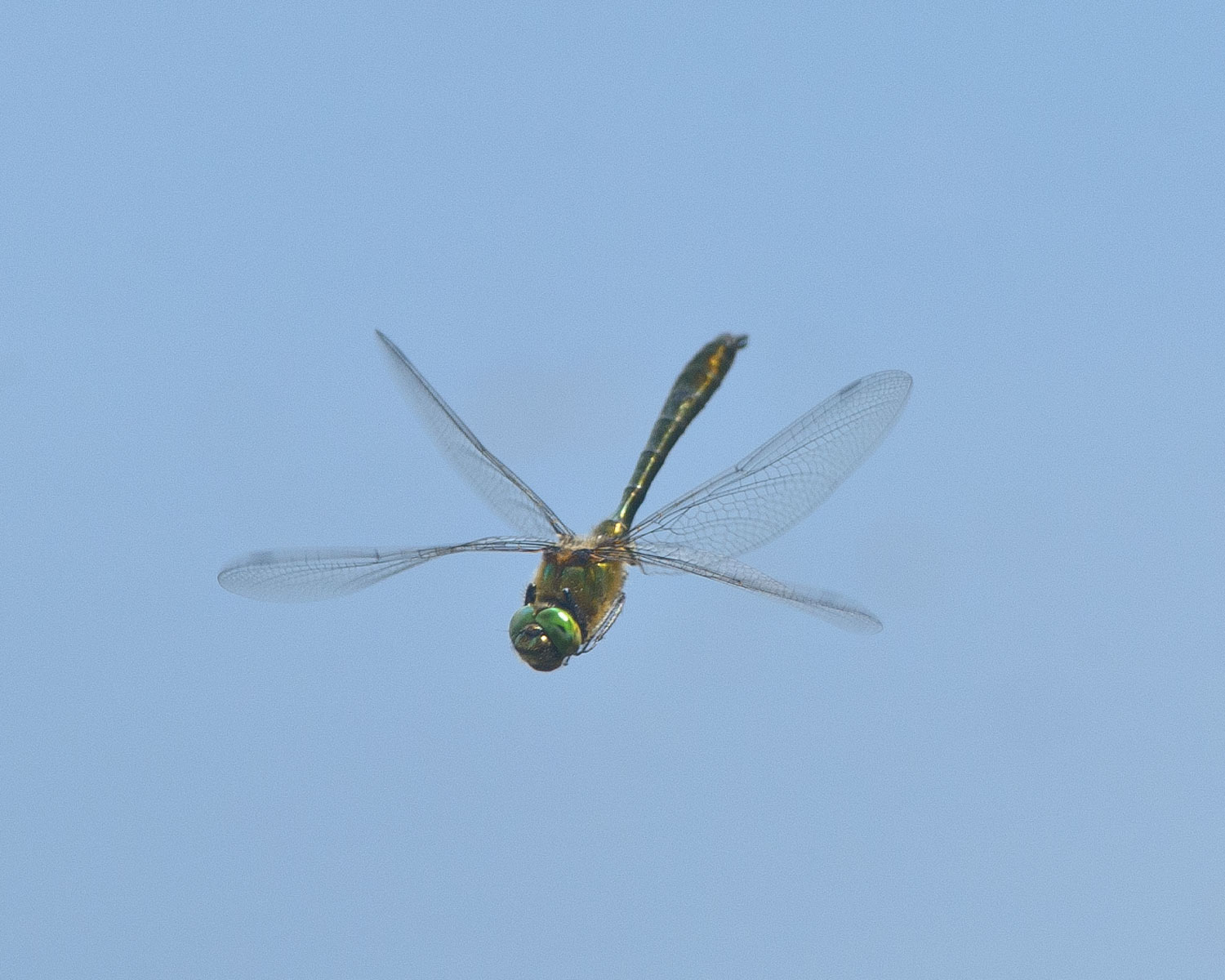

The walk onto the heath itself was not all that productive as bird life was a bit quiet-apart from a single Tree Pipit and a few Reed Buntings and Stonechats. One or two Hobbys were around. Due to the breeze insects were a bit hard to locate though a single Keeled Skimmer was seen. Several stands of orchids were found but most seemed to be Early Marsh, of the form pulchella much darker purple than my local pale pink incarnata.
Saturday, 16 June 2012
Little Bittern
News broke on Tuesday of a female Little Bittern photographed at Stockers Lake on Sunday. Initial searches on Wednesday failed but it was relocated and showed intermittently until early afternoon before flying down river. I had the car ready to leave from work early on Thursday but there was no news, ditto Friday so I was a bit surprised to hear that it had been relocated this morning.
Despite feeling a bit rough I made my way down to the aquadrome and eventually got down to the river Colne and met up with numerous Herts birders. Ricky from Tyttenhanger had it's back in his scope and that was all we had for a long time as it moved off into the back of the reeds.
After a long wait it reappeared under one of the willlows perched for a spell and then made it's way down to the base of the trees where we got very good close, but partly obscured views. It remained here for some time before flying into the reeds. I had moved downstream where Darryl had found a viewpoint but was too slow with the camera. For the next hour it fed in and among the reeds and often gave very good views largely in the open.


Despite feeling a bit rough I made my way down to the aquadrome and eventually got down to the river Colne and met up with numerous Herts birders. Ricky from Tyttenhanger had it's back in his scope and that was all we had for a long time as it moved off into the back of the reeds.
After a long wait it reappeared under one of the willlows perched for a spell and then made it's way down to the base of the trees where we got very good close, but partly obscured views. It remained here for some time before flying into the reeds. I had moved downstream where Darryl had found a viewpoint but was too slow with the camera. For the next hour it fed in and among the reeds and often gave very good views largely in the open.


Sunday, 10 June 2012
Dragonflies and another Bee
I had intended to go up to north Herts again this morning, to see the Turtle Doves at Ashwell and check the Deadman's Hill area for Quail. However with it being sunny and warm for once, I decided to go to Amwell as there was a good chance that dragonflies would be flying.
The usual Sunday crowd was present as I arrived, but soon dispersed, so I headed off to Hollycross. Found a few Common Blue Damselflies on the way, and decent numbers of Red Eyes on the lily pads in Tumbling Bay.
As soon as I arrived at Hollycross, I ran into someone I knew who mentioned that he had found some Brown Argus and a Bee Orchid. I assumed he had been around to see the plants that are out of bounds but no, this was not far from the gate.

Bit of a struggle with the 300mm+1.7 converter due to it's focussing distance.
On the boardwalk, there were several people present and the Sunday crew also turned up. A few Azure Damsels were flying and a number of Four Spotted Chasers. Eventually we saw several Broad Bodied Chasers-only one blue one though and then Tony and John picked out a female Hairy Dragonfly-I had feared that I would be too late for this early flier. It was ovipositing at the back of one of the pools and had flown out of sight. However I made my way round and got decent views. I then realised that I was standing beside a 3 foot Grass Snake sunning itself. I called the others over but the vibrations of their feet was enough to disturb it and it went as they arrived. despite searching we never found it.


A male Hairy was seen on the way back, but apart from a single Red Admiral I never saw any butterflies.
Back at the watchpoint the main item of interest were the two juvenile Little Egrets not long out of the nest. Seems like there are several active nests in the Lea Valley this year.
The Oystercatchers are still present, as are several Redshanks. Otherwise not much-it's the early summer period when things start to go quiet and the ducks start to moult.
The usual Sunday crowd was present as I arrived, but soon dispersed, so I headed off to Hollycross. Found a few Common Blue Damselflies on the way, and decent numbers of Red Eyes on the lily pads in Tumbling Bay.
As soon as I arrived at Hollycross, I ran into someone I knew who mentioned that he had found some Brown Argus and a Bee Orchid. I assumed he had been around to see the plants that are out of bounds but no, this was not far from the gate.

Bit of a struggle with the 300mm+1.7 converter due to it's focussing distance.
On the boardwalk, there were several people present and the Sunday crew also turned up. A few Azure Damsels were flying and a number of Four Spotted Chasers. Eventually we saw several Broad Bodied Chasers-only one blue one though and then Tony and John picked out a female Hairy Dragonfly-I had feared that I would be too late for this early flier. It was ovipositing at the back of one of the pools and had flown out of sight. However I made my way round and got decent views. I then realised that I was standing beside a 3 foot Grass Snake sunning itself. I called the others over but the vibrations of their feet was enough to disturb it and it went as they arrived. despite searching we never found it.


A male Hairy was seen on the way back, but apart from a single Red Admiral I never saw any butterflies.
Back at the watchpoint the main item of interest were the two juvenile Little Egrets not long out of the nest. Seems like there are several active nests in the Lea Valley this year.
The Oystercatchers are still present, as are several Redshanks. Otherwise not much-it's the early summer period when things start to go quiet and the ducks start to moult.
Saturday, 9 June 2012
Bee Orchid
Following last week's Kent trip, I got a call from my sister to say that they had found a bee orchid while walking Molly. I knew roughly where they had seen it, but thought it best to wait until they were in so I could go over with them.
Turned out to be quite a nice specimen, with two fully developed flowers and more to come. Not easy to get a good 'pose' due to it's location. Had a search of the surrounding area (Sarah and Ed have kept an eye out too) but no others were seen, but it looks like a good location.

Turned out to be quite a nice specimen, with two fully developed flowers and more to come. Not easy to get a good 'pose' due to it's location. Had a search of the surrounding area (Sarah and Ed have kept an eye out too) but no others were seen, but it looks like a good location.

Tuesday, 5 June 2012
Herts Orchids
Visited the extreme north east corner of Hertfordshire this morning as there are a few orchid sites I have not visited before.
On top of Therfield heath is Fox Covert, a fairly young 19th C beech wood and an adjoining section of mixed beech and conifer planted for the Silver Jubilee in 1977.
I went there for White Helleborine, expecting to find a small number, but in the end I think it is the best display I have found with very large numbers of plants. Even though a good 60+% have been eaten, there were still several hundred plants in pretty good condition.


Nearby Church Hill where the Pasque Flowers are found did not have anything of note.
Blagrove Common was hard to find but worth the effort. Large numbers of Early Marsh orchids are in flower, along with Southern Marsh (and many intermediate forms). A few Common Spotted Orchids were found too. The damp meadow looked spectacular, covered in buttercups and Ragged Robin.


On top of Therfield heath is Fox Covert, a fairly young 19th C beech wood and an adjoining section of mixed beech and conifer planted for the Silver Jubilee in 1977.
I went there for White Helleborine, expecting to find a small number, but in the end I think it is the best display I have found with very large numbers of plants. Even though a good 60+% have been eaten, there were still several hundred plants in pretty good condition.


Nearby Church Hill where the Pasque Flowers are found did not have anything of note.
Blagrove Common was hard to find but worth the effort. Large numbers of Early Marsh orchids are in flower, along with Southern Marsh (and many intermediate forms). A few Common Spotted Orchids were found too. The damp meadow looked spectacular, covered in buttercups and Ragged Robin.


Monday, 4 June 2012
Jubilee Weekend
Its Bank Holiday and the Jubilee weekend, so inevitably its cold and wet.
Saturday we took a snap decision to visit Kent as I had heard that Late Spider Orchids were coming into flower-we missed them the last few years. The only location I knew was Wye Downs, but I did not have any specific directions, but Colin had obtained a grid reference. We arrived at 0930 and found the wind to be rather strong, cold and very wet underfoot.
We walked down to the grid ref, finding a small colony of Common Fragrant Orchids on a bank along a lane-there were a few Common Spotted coming into flower as well. Searching the location failed to find any sort of orchids, and none of the cages we expected to see for the Spiders. Several large stands of Deadly Nightshade were found though.
After returning to the car we searched the hillside and I found many more fragrants, and eventually a single Bee Orchid. A couple of butterflies were seen-some Small Heath and a single Adonis Blue.


Sunday was very wet, not ideal for the Jubilee Flotilla on the Thames but I stayed in to watch as there was little point going out.
Today with better weather I spent the morning at Amwell. The cold northerly wind was not pleasant and we had several light showers too.
Large numbers of Swifts feeding over the water-apparently 500 were counted, with similar numbers of House Martins and some Sand Martin and Swallows too.
The Oystercatchers are still around, but the three chicks did not make it. Redshank are still displaying but wether anything will happen now is debatable-it seems a bit late. Lots of juvenile Herons too, though I don't think the Purple lookalike is around.
Few raptors most of the morning but a few Buzzards, three Hobby and a few Kestrel and Kites did show eventually. The Hobbys were hunting the martins due to the lack of suitable insects
Saturday we took a snap decision to visit Kent as I had heard that Late Spider Orchids were coming into flower-we missed them the last few years. The only location I knew was Wye Downs, but I did not have any specific directions, but Colin had obtained a grid reference. We arrived at 0930 and found the wind to be rather strong, cold and very wet underfoot.
We walked down to the grid ref, finding a small colony of Common Fragrant Orchids on a bank along a lane-there were a few Common Spotted coming into flower as well. Searching the location failed to find any sort of orchids, and none of the cages we expected to see for the Spiders. Several large stands of Deadly Nightshade were found though.
After returning to the car we searched the hillside and I found many more fragrants, and eventually a single Bee Orchid. A couple of butterflies were seen-some Small Heath and a single Adonis Blue.


Sunday was very wet, not ideal for the Jubilee Flotilla on the Thames but I stayed in to watch as there was little point going out.
Today with better weather I spent the morning at Amwell. The cold northerly wind was not pleasant and we had several light showers too.
Large numbers of Swifts feeding over the water-apparently 500 were counted, with similar numbers of House Martins and some Sand Martin and Swallows too.
The Oystercatchers are still around, but the three chicks did not make it. Redshank are still displaying but wether anything will happen now is debatable-it seems a bit late. Lots of juvenile Herons too, though I don't think the Purple lookalike is around.
Few raptors most of the morning but a few Buzzards, three Hobby and a few Kestrel and Kites did show eventually. The Hobbys were hunting the martins due to the lack of suitable insects
Subscribe to:
Posts (Atom)